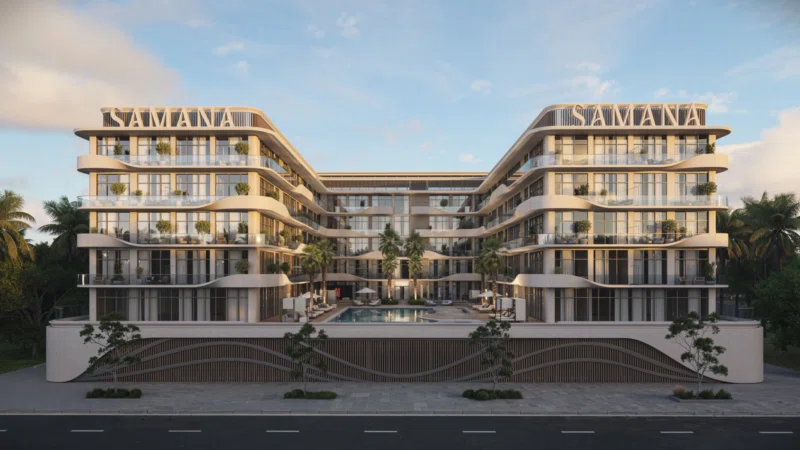
Object typeResidential
Completion dateQ4 2028
DeveloperSamana Developers
Total areafrom 129 m² to 170 m²
Down Payment20%
In this article, we will explore the third buyer profile – the rentier, for whom real estate primarily serves as a source of stable passive income.
and their five key characteristics:
– Invests in real estate with the goal of generating regular rental income
– Focuses on long-term cash flow rather than quick resale
– Prefers completed or nearly completed properties that allow for a quick start to leasing
– Makes decisions pragmatically by comparing return on investment, occupancy rates, and management costs
– Expects a transparent financial model and a clear property management system
Let us take a closer look at how these characteristics manifest in practice.
The rentier views overseas real estate primarily as a source of long-term foreign currency cash flow. Typically, this is a buyer with a budget of around $200,000, who starts with one or two properties and gradually builds a rental portfolio. Their goal is not one-time speculative profit, but a steady cash flow with clear economics and the ability to sell the property in the future without losses. An additional advantage for such a buyer is the option of personal use of the property when needed.
In the information space, the rentier is quite active, but this interest is practical in nature. They focus on information related to the rental market and real-life owner cases. Their attention is drawn to area reviews from a rental demand perspective, comparisons of property formats, and breakdowns of key figures. Unlike a beginner investor, they have fewer doubts about real estate as an instrument, but pay close attention to the details that impact overall returns.
When choosing a property, the rentier focuses on completed or nearly completed projects that allow for a quick start to leasing. Priority is given to fully furnished apartments with appliances, well-developed local infrastructure, and locations that are in demand among tenants. The property format also matters: traditional apartments and apart-hotels are evaluated in terms of occupancy rates, profitability, and ease of management. Installment payment plans often become an important condition, allowing the buyer to spread the financial burden without reducing overall profitability.
The decision-making process for a rentier is typically less complex than that of a beginner investor. They already have a clear understanding of how to generate passive income and act more pragmatically, so a wide selection of properties within the same budget allows them to calmly compare options and choose the optimal one without a fear of missed opportunities.
The main risks for this type of buyer are not related to the purchase itself, but to the ongoing operation of the property. They are concerned about potential rental vacancies, hidden maintenance costs, the quality of property management companies, and discrepancies between projected and actual returns. All of these factors directly affect real cash flow and make the investment less predictable. That is why, at the stage of closing the deal, the decisive factor is not the promise of high figures, but a transparent financial model and a clear management system that allows for forecasting cash inflows and controlling risks in the long term.
When working with a rentier, the key factors are the reliability of future returns and the predictability of property operations. For this type of buyer, the purchase itself is less important than how the property will perform after the deal – how profitable it will be and how easy it will be to manage the rental process.
Other buyer profiles that require a different approach from the realtor: